
Parkinson's Physiotherapy at Home in Melbourne
Physiotherapy built around how Parkinson’s actually affects movement: walking, freezing, balance, transfers and falls. Delivered in your own home across Melbourne.
FREE · No Obligation
Book Your Free Consultation
We’ll contact you within 1 business day
- No travel fee
- Private & NDIS
- Same-week appts
Home Visits
No Travel Fee
Free Initial Consultation
Neurological Rehabilitation Expertise
Parkinson's rehabilitation, in the place you move every day
Parkinson’s changes movement in specific, recognisable ways: steps get shorter, movements get smaller, turning becomes harder, and for many people walking stops altogether for a moment in doorways or tight spaces.
Those problems are environment-dependent, which is why treating at home matters. Freezing happens in your doorway, not in a treatment room. Your bed, your chair and your hallway are where the difficulty lives, and where the retraining should happen.
Physiotherapy does not cure Parkinson’s or alter its progression. It targets the movement and functional consequences, and it is a well-established part of Parkinson’s care alongside medical management.
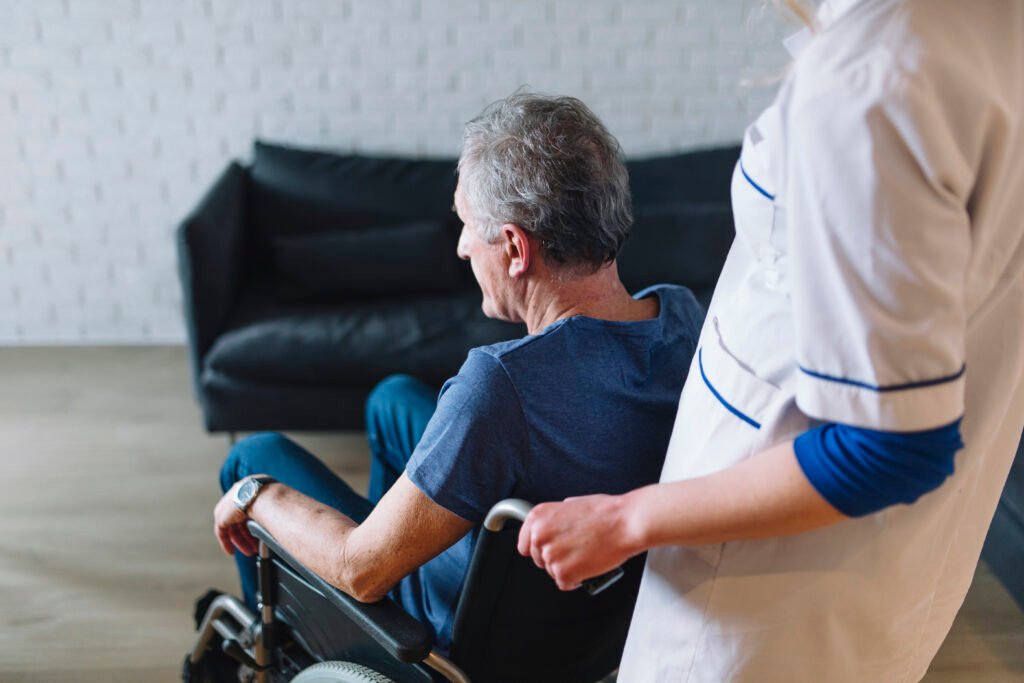
What we provide for Parkinson's patients
Gait retraining and cueing strategies
Walking assessment followed by targeted retraining, including cueing techniques. Visual cues such as floor markers and auditory cues such as a set rhythm are among the better-supported approaches for Parkinson's gait, and we teach them so they can be used independently.
Freezing of gait management
Freezing can be triggered by the environment, by divided attention or by anxiety, and it needs assessment rather than a single technique. Cueing and movement strategies form the core of the approach, practised in the specific locations where freezing occurs for you.
Balance training and falls prevention
Reduced balance, reduced leg strength and freezing have all been identified as falls risk factors in Parkinson's, which makes them the logical targets. Balance work needs to be genuinely challenging to be effective, delivered safely.
Strength and movement amplitude work
Leg strength training addressing one of the main falls risk factors, alongside work on movement size, since Parkinson's tends to make movements progressively smaller without the person noticing.
Transfers and bed mobility
Rolling over, getting out of bed and rising from chairs are among the earliest and most frustrating difficulties. Specific movement strategies often help considerably, and they are best taught on the actual bed and chair.
Rehabilitation and medication timing
Function can vary substantially across a medication cycle, better known as on and off phases. Our physiotherapists can assess your functional baseline in these on and off phases, and liaise with the neurologist to optimise medications.
Carer and family education
Practical training for partners and family, including how to assist during a freezing episode, safe support with transfers, and how to provide effective cueing strategies.
Our myNeuro difference for Parkinson’s rehab
- Comprehensive in-home assessment of gait, balance, transfers and function
- Assessment of shuffling and freezing of gait
- A rehabilitation plan to improve your functional capacity and address Parkinson’s related impairments.
- Cueing and movement strategies taught for independent use
- A home programme designed for consistency, since sustained exercise matters in Parkinson's
- Communication with your neurologist or Parkinson's nurse where you want it
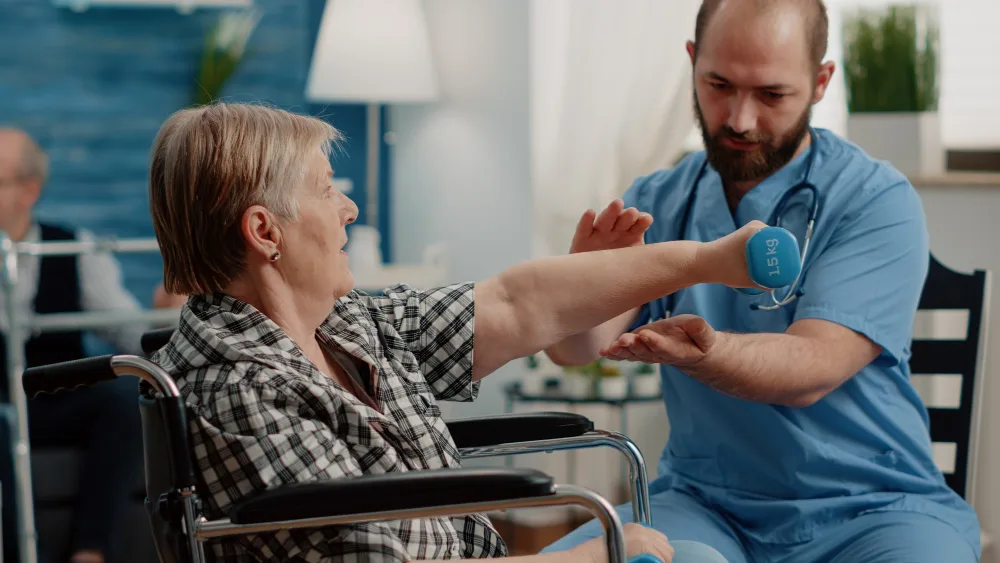

Who this service is for
- People discharged after joint replacement, fracture surgery or other operations
- People whose walking has become shorter, slower or less steady
- People experiencing freezing episodes
- People who have fallen or are at increasing risk of falling
- People finding transfers and bed mobility increasingly difficult
- Partners and family wanting to know how to help safely
How it works
Free initial consultation
We talk through your diagnosis, how long you have had symptoms, what is hardest at home, how your medication cycle affects you, and what you want to protect. Free, with no obligation.
Comprehensive assessment
Assessment of gait, balance, transfers, freezing triggers and daily function in your own home, where the real difficulties occur.
Personalised rehabilitation plan
A plan built around your findings and goals, including cueing and movement strategies you can use independently.
Why myNeuro for Parkinson's
Neurological rehabilitation is the core of the business
Parkinson's rehabilitation is a distinct skill set. myNeuro was built around neurological rehabilitation rather than treating it as an occasional referral, and Parkinson's is core work for us.
Freezing is assessed where it happens
Freezing is triggered by specific environments, most often doorways, turns and confined spaces. Assessing it anywhere but your home means assessing a proxy.
Strategies you keep
Cueing and movement strategies to address the shuffling and freezing of gait are taught to be used independently, and to your family. The aim is that you leave each block of care with tools, not a dependency.
How physiotherapy fits into Parkinson's care
Parkinson’s is managed by a team. Neurologists lead medical management, and physiotherapy addresses the movement side: walking, balance, transfers, falls risk and physical activity levels.
The evidence base for physiotherapy in Parkinson’s is reasonably well developed, particularly around cueing for gait and freezing, ‘Big Moves’ interventions, and around balance and leg strength training for falls risk. Exercise is generally most effective when it is sustained and genuinely challenging rather than gentle and occasional. What is appropriate and safe for any individual depends on their stage, their falls history and other health conditions, which is what assessment establishes.

Fees and funding
The initial over-the-phone consultation is free. Our rates are in accordance with regulatory standards, with no hidden fees and no travel fee within our service area.
People with Parkinson’s access physiotherapy through arrangements including the Support at Home programme, NDIS funding, Medicare care plans, private health insurance and private payment.
Eligibility is determined by the relevant scheme, and we can talk through how access usually works or liaise with your coordinator.
Frequently asked questions
No. Physiotherapy does not cure Parkinson’s or alter its progression. It targets the movement consequences: walking, balance, transfers, falls risk and physical activity. Medical management sits with your neurologist.
Freezing is assessed first, because triggers differ between people. Cueing strategies, both visual and auditory, along with movement strategies, are among the better-supported approaches and can be taught for independent use. Practising in the places where you actually freeze is a significant advantage of home-based treatment.
Evidence generally favours exercise that is sustained over time and genuinely challenging, particularly balance training and leg strengthening, both of which target established falls risk factors. What is safe and appropriate for you depends on your stage and falls history, which assessment establishes.
Function commonly varies across a medication cycle, and your rehabilitation is usually structured with that in mind. We will ask about your cycle at assessment and plan around it.
No. Establishing movement habits and physical activity early is reasonable, and it means we have a clear baseline to work from as things change.
Yes, and it is one of the more useful things family can learn. Cueing techniques a partner can use, and knowing what tends to make freezing worse, both make a practical difference.
Related myNeuro services
Neuro Rehab
Rehabilitation for neurological conditions across the board
Mobile Physiotherapy in Melbourne
Home visits across Melbourne for all conditions
MS Home Physio
Fatigue-aware rehabilitation for multiple sclerosis
Book your free consultation
If walking, freezing or falls are changing daily life, we can assess it where it actually happens. The first consultation is free and carries no obligation.
No cost, no obligation