
Stroke Rehabilitation at Home in Melbourne
Rehabilitation does not have to stop when hospital rehabilitation does. myNeuro delivers stroke physiotherapy in your own home across Melbourne, focused on the functional goals that matter to you.
FREE · No Obligation
Book Your Free Consultation
We’ll contact you within 1 business day
- No travel fee
- Private & NDIS
- Same-week appts
Home Visits
No Travel Fee
Free Initial Consultation
Neurological Rehabilitation Expertise
Continuing stroke recovery after discharge
Stroke recovery does not end at the hospital door. Australian Stroke Guidelines recognises rehabilitation as a continuing process, with individualised plans intended to support people after discharge, and recovery can continue well beyond the inpatient stay.
In practice, many people find their therapy and functional gains drop sharply once they get home. myNeuro exists for that phase, where we deliver rehabilitation in the environment where the goals live, helping you become as independent as possible in your activities of daily living.
How much recovery is possible varies enormously between people and depends on the stroke itself, other health conditions and where someone is starting from. That’s why we perform a comprehensive initial stroke assessment to identify your unique challenges and impairments, and create a personalised rehab plan for you.
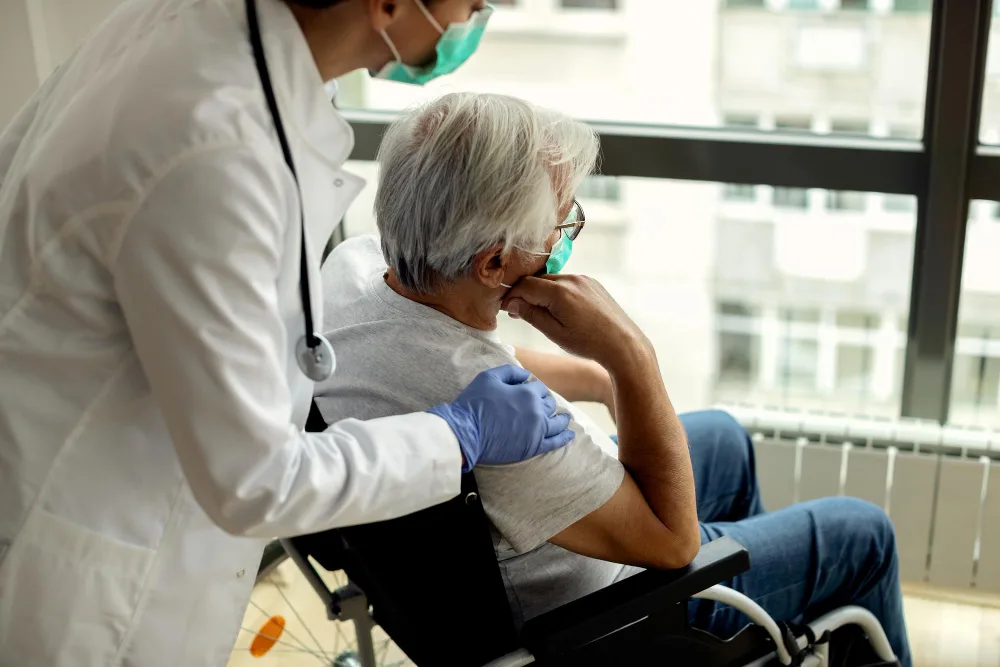
The expertise we provide for Stroke patients
Walking and gait retraining
Assessment and retraining of walking patterns. Our physiotherapists will identify what is contributing to your mobility being affected, and providing gait retraining to improve your ability to walk. Aids and orthoses are also assessed where they would help.
Task-specific functional practice
Repeated practice of the specific tasks you want to recover, which is a central principle of stroke rehabilitation. What you practice, and how much of it you do, both matter.
Balance retraining and falls prevention
Falls risk is elevated after stroke, often through a combination of weakness, altered sensation, balance change and reduced confidence. Assessment identifies which factors apply, and our rehabilitation targets those.
Strength and movement retraining
Progressive strengthening for affected and hemiparetic limbs, alongside general reconditioning since reduced activity after stroke has physical consequences of its own.
Transfers and daily activity retraining
Bed mobility, sit-to-stand, toilet and shower transfers and the daily tasks that determine how independently someone manages at home.
Spasticity and tone management
Stretching, positioning and movement approaches for increased muscle tone, taught so they can be maintained between visits, and coordinated with your medical team where other management is in place.
Outdoor mobility and getting back out
Australian Stroke Guidelines specifically supports tailored strategies for community mobility, including escorted outdoor practice such as local walks and crossing roads. Getting back out of the house is a legitimate rehabilitation goal, and we treat it as one.
Carer and family education
Practical training on safe assistance with transfers and mobility, and on supporting practice between sessions without doing the work for the person.
Our myNeuro difference for stroke rehab
- People recently discharged after a stroke, continuing rehabilitation at home
- People whose hospital or outpatient rehabilitation has ended while goals remain
- People months or years post-stroke wanting to work on specific function again
- People who cannot easily travel to outpatient rehabilitation
- Families wanting guidance on safe assistance and effective practice
- Stroke unit staff, discharge planners and coordinators arranging home-based rehabilitation
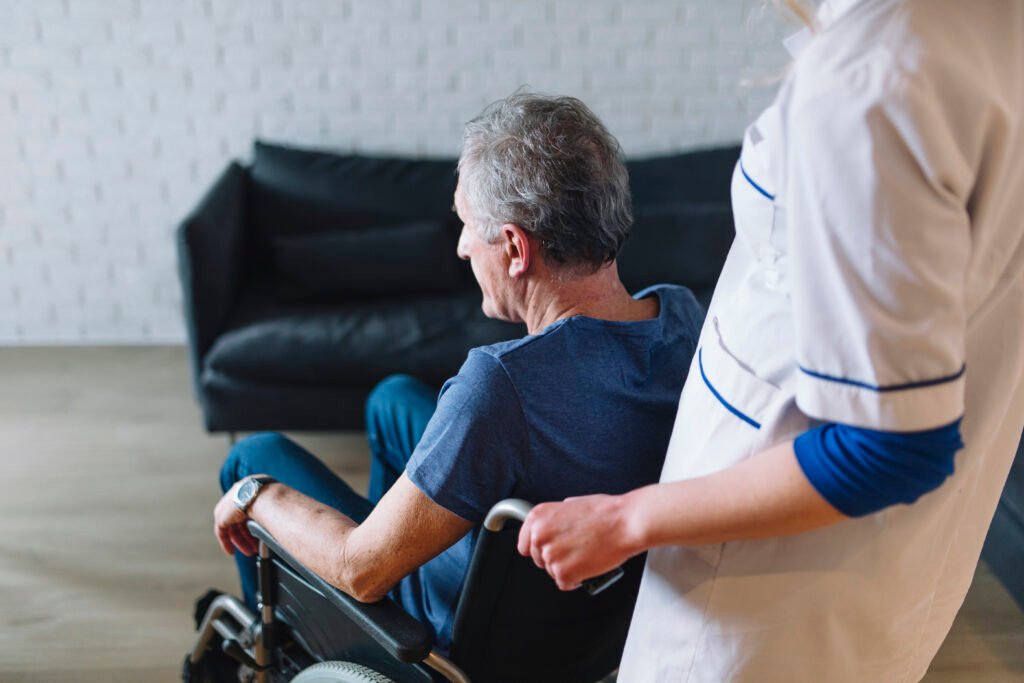
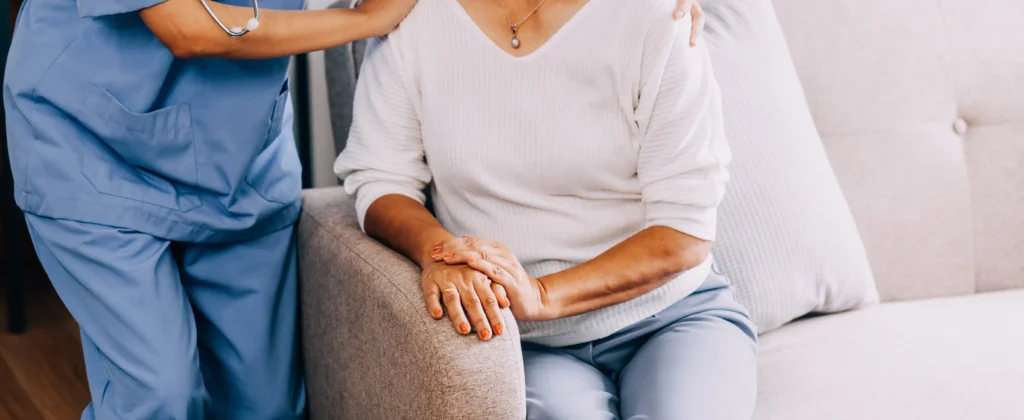
Who this service is for
- People recently diagnosed with MS who want to get ahead of functional change
- People whose walking, balance or strength has changed
- People managing significant MS fatigue, and cannot travel to appointments
- People recovering function after a relapse
- People with more advanced MS needing support with transfers and daily activities
- Partners and family wanting practical guidance on safe assistance
How it works
Free initial consultation
We talk through the stroke, what rehabilitation has happened so far, what has been left unfinished and what you most want to recover. Free, with no obligation.
Comprehensive assessment
Assessment of stroke-related impairments, movement, strength, balance, transfers, walking and daily function in your own environment, including what the home demands of you.
Personalised rehabilitation plan
A plan built around the functional goals, helping you become as independent as possible.
Why myNeuro for stroke recovery
Stroke rehabilitation is core work
myNeuro was built around neurological rehabilitation, and stroke is among the most common reasons people come to us. It is not an adjacent service.
Hospital-informed practice
Our physiotherapists are experienced across the stroke pathway from ICU, acute, rehabilitation and movement disorder wards, to community settings at home and in-aged care. This informs a unique perspective on stroke rehabilitation and ensures you are receiving quality care.
Goals set in the environment they belong to
A goal like getting in and out of bed, sitting to standing, walking around the home independently, are all part of your daily activities that we want to help you achieve. That is the strongest argument for home-based stroke rehabilitation, as we are able to set functional goals that matter most to you.
Families become part of the recovery
Progress in stroke rehabilitation depends heavily on repetition outside sessions. Training family to support practice safely is one of the most valuable things we do.
Why rehabilitation continues after hospital
Stroke affects people in very different ways depending on which part of the brain was involved and how much damage occurred. Movement, transfers, strength, balance, coordination, sensation and the ability to carry out everyday tasks can all be affected, in almost any combination.
Australian Stroke Guidelines treats rehabilitation as a continuum rather than a fixed episode, with a comprehensive initial assessment, early assessment of rehabilitation needs, an individualised plan, and support continuing after discharge from hospital. That is precisely the phase home-based rehabilitation is suited to, and where myNeuro steps in to help achieve your personalised goals and improve your functional capacity.
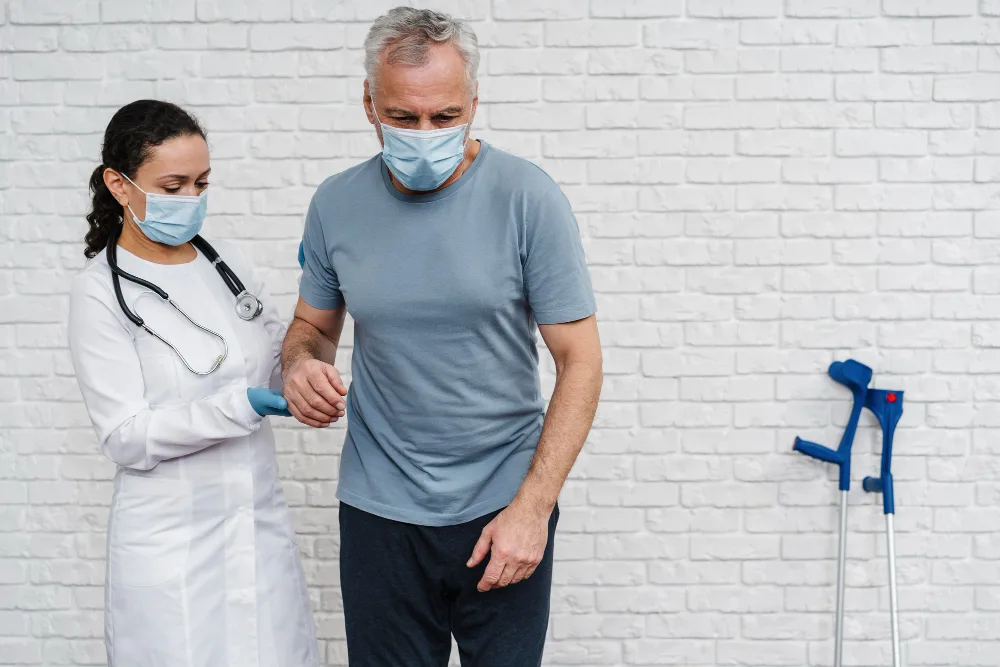

Fees and funding
The initial over-the-phone consultation is free. Our rates are in accordance with regulatory standards, with no hidden fees and no travel fee within our service area.
Stroke survivors access physiotherapy through arrangements including the Support at Home programme, NDIS funding, Medicare care plans, private health insurance and private payment. Eligibility is determined by the relevant scheme rather than by us. We can talk through how access usually works and liaise with your coordinator or discharge planner.
Frequently asked questions
Strong No. Functional gains can still be made well after the early period, particularly when rehabilitation targets specific tasks a person wants to recover and involves enough repetition. What is realistic depends on the individual, which assessment establishes.
Yes, and this is one of the most common reasons people contact us. Australian Stroke Guideline treats rehabilitation as continuing after discharge, and home is where the remaining goals usually sit.
Nobody can promise that, and you should be cautious of anyone who does. Recovery after stroke varies enormously depending on the stroke and the individual. Your physiotherapist can give you a considered view after assessment rather than a prediction beforehand.
No referral is needed to contact myNeuro directly. Stroke teams, GPs, discharge planners and coordinators are also welcome to refer.
This depends on our initial assessment and your clinical presentation post stroke. Based on your impairments and unique challenges faced, we are able to advise on a personalised rehabilitation plan.
Yes. Community mobility is a recognised rehabilitation goal, and Australian Stroke Guidelines supports tailored outdoor practice for people whose access has become restricted. That can include local walks, kerbs, road crossings and getting to nearby shops.
Yes, and we would encourage it. Safe assistance with transfers and mobility, and knowing how to support practice without taking over, both make a real difference to progress.
Yes. Stroke recovery is multidisciplinary, and we can share findings and progress with occupational therapists, speech pathologists, your GP and your stroke team.
Related myNeuro services
Neuro Rehab
Rehabilitation for neurological conditions across the board
Post-Surgery and Hospital Discharge Rehab
Rebuilding function after a hospital admission
Mobile Physiotherapy in Melbourne
Home visits across Melbourne for all conditions
Book your free consultation
If hospital rehabilitation has ended and there is still ground you want to recover, we can come to you. The first consultation is free and carries no obligation.
No cost, no obligation